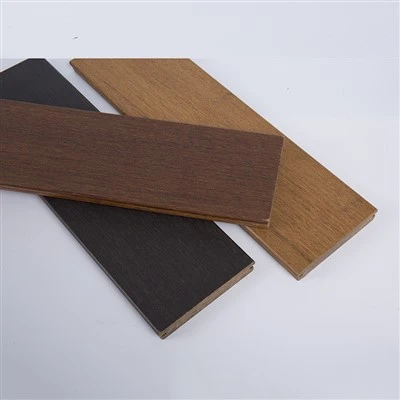

Background Art:
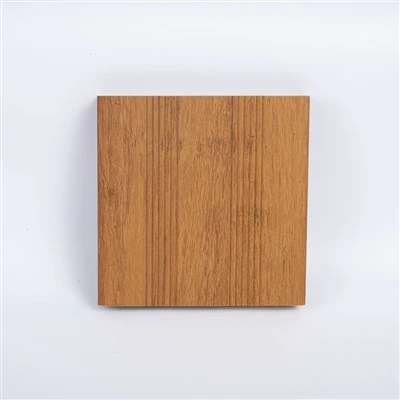
Existing reconstituted bamboo materials are typically produced by cutting, splitting, and processing bamboo into strands or strips, followed by drying, resin impregnation, longitudinal assembly, and hot pressing. These materials are characterized by high density and strength and have found widespread application in structural uses.
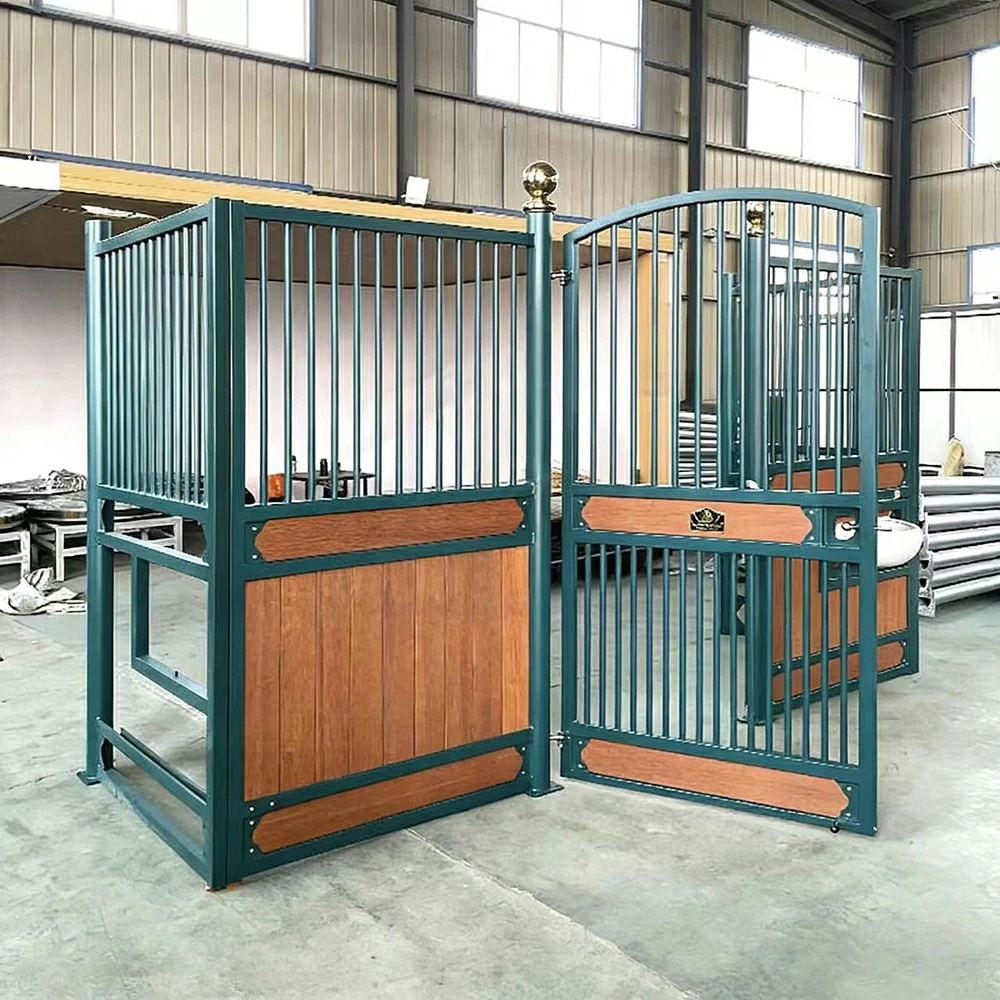
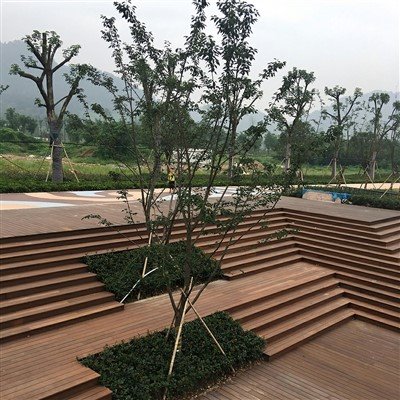
Reconstituted bamboo is currently widely used in applications such as indoor flooring, interior wall panels, garden decking, profiles, and stable boards. As a type of solid bamboo board, it is highly sought after by major furniture manufacturers due to its renewable nature-especially as supplies of traditional solid wood boards dwindle-and it now occupies a significant share of the solid board market.
Existing reconstituted bamboo stable boards are connected via interlocking tongue-and-groove structures on their side edges. While these connections are simple in design, they lack robustness and fail to provide vertical positioning, resulting in poor stability that compromises both the installation process and the visual quality of the finished stable boards.
Summary of the Invention:
The objective of the present utility model is to provide a reconstituted bamboo stable board with reliable positioning capabilities, thereby enhancing structural stability during installation and improving visual quality.
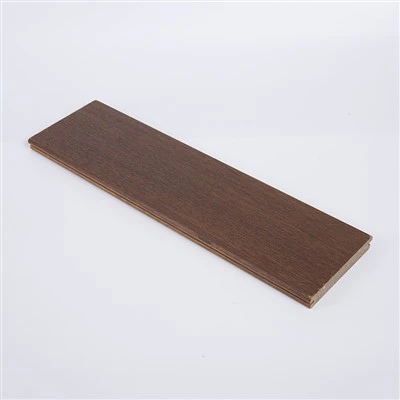
The reconstituted bamboo stable board with reliable positioning features a board body. A positioning protrusion is provided on the left side of the board body, while a corresponding positioning groove-designed to mate with the protrusion-is formed on the right side. The bottom surface of the positioning groove is situated above the bottom surface of the board body. An installation hole is provided at the bottom end of the board body, featuring a positioning slot and a locking slot.
The bottom surface of the positioning protrusion is located above the bottom surface of the board body. An installation pin, designed to engage with the installation hole, is provided on the bottom surface of the positioning protrusion. The lower end of the installation pin is equipped with a positioning block that mates with the positioning slot, as well as a breakable filler piece designed to fit into the locking slot.
Furthermore, the opening of the positioning slot faces the opening of the locking slot. Due to the aforementioned structure, the securely positioned reconstituted bamboo stable panel described in this utility model achieves initial positioning when the mounting pin is inserted into the mounting hole, and further positioning is secured through the engagement of the positioning block with the positioning slot. Additionally, the filler piece is snapped off to fill the locking slot, ensuring a tight, secure, and reliable connection between adjacent panels that resists deformation, thereby enhancing the installation quality of the stable panels.