
Manufacturing Process
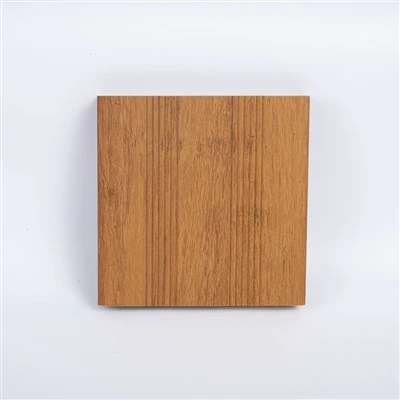
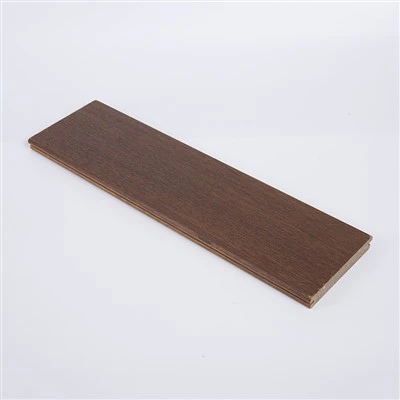
The manufacturing process for bamboo flooring differs from that of traditional bamboo products. It utilizes high-quality bamboo that undergoes rigorous selection, processing, bleaching, vulcanization, dehydration, and treatments for pest and rot resistance. The material is then bonded using thermosetting adhesives under high temperature and pressure. Compared to solid wood flooring, bamboo flooring has distinct advantages and disadvantages. It is wear-resistant, pressure-resistant, moisture-resistant, and fire-resistant; its physical properties-such as tensile strength and dimensional stability (lower shrinkage)-surpass those of solid wood, meaning it does not crack, twist, warp, or buckle after installation. However, due to its high strength and hardness, it is less comfortable underfoot than solid wood and offers less visual variety. Its appearance features natural bamboo grain and attractive coloring, appealing to the desire to reconnect with nature-an aspect in which it outperforms composite wood flooring. Consequently, its price point falls between that of solid wood flooring and composite wood flooring.
Standard Bamboo Flooring Production Workflow
Moso bamboo → Cross-cutting → Smoothing outer nodes → Stripping → Removing inner nodes → Double-sided planing (removing outer skin and inner pith) → Steaming (pest/mold treatment) or carbonization/coloring → Drying → Precision planing → Sorting → Gluing → Assembly → Hot-press bonding → Sanding → Length cutting → Four-sided planing (width sizing and back grooving) → Double-end milling (tenon cutting) → Edge sealing → Sanding (raw board) → Sorting → Dust removal → Water-based primer → Hot-air drying → Putty application → UV curing → Primer → UV curing → Sanding → Primer → UV curing → Sanding → Topcoat → UV curing → Scratch-resistant topcoat → UV curing → Inspection → Packaging
Production Process
1. Raw Bamboo Inspection
Moso bamboo is typically used as the raw material for bamboo flooring; however, its mechanical properties are closely linked to the bamboo's age and the section of the stalk used. Bamboo younger than four years lacks sufficient lignification, resulting in unstable strength and high rates of shrinkage and swelling; therefore, Moso bamboo aged five years or older should be selected. Bamboo culms typically have thicker walls at the base and thinner walls at the tip. Therefore, the raw material selected is usually fresh Moso bamboo that is straight, with a diameter at breast height (DBH) exceeding 10 cm and a wall thickness of over 7 mm.
2. Cutting to Length
Moso bamboo is thick at the base and thin at the top. The bamboo culms are sorted based on wall thickness and cut into specified lengths.
3. Splitting into Strips
The raw bamboo is split into uniform strips.
4. Initial Planing
After drying, the bamboo strips undergo precision planing on all four sides to remove residual outer skin (green layer), inner lining (yellow layer), and rough planing marks. This treatment ensures a strong bond between strips, preventing cracks, splitting, or delamination. Following precision planing, the strips are sorted; those failing to meet dimensional specifications or exhibiting significant color variations are removed from the production line.
Preliminary surface treatment involves removing the green and yellow layers-specifically the outer skin and inner flesh-leaving only the central coarse-fiber layer. Traditional bamboo products were often made by bending whole tubular sections without removing these layers; because the outer skin and inner flesh have different densities and fiber structures, they shrink and deform at different rates under the same humidity conditions, making them prone to cracking. Furthermore, the inner yellow layer (bamboo flesh) contains high levels of sugars and nutrients, making it susceptible to insect infestation and mold growth if not removed.
Regarding thickness, bamboo possesses higher flexural strength than wood; a 15 mm thick bamboo floor offers sufficient resistance to bending, compression, and impact, while also providing a comfortable feel underfoot. To cater to the consumer preference for greater thickness, some manufacturers skip the removal of the green and yellow layers; although the resulting flooring may be 17 mm or 18 mm thick, the bond strength is compromised, making it more prone to cracking. In contrast, high-quality bamboo flooring undergoes rough planing to remove the green and yellow layers, followed by precision planing to ensure a tight fit during assembly and gluing. Thickness and width tolerances are strictly controlled within 0.1 mm, and the adhesive used to bond the bamboo components cures rapidly under high heat, resulting in exceptional bond strength.
5. Steaming/Bleaching or Carbonization
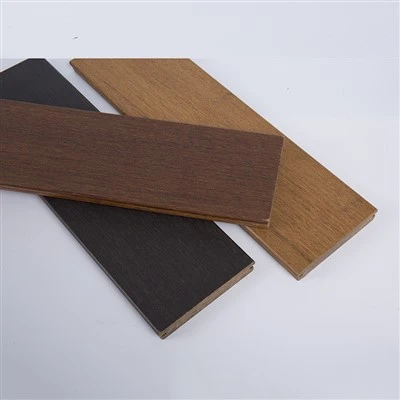
The chemical composition of bamboo is fundamentally similar to that of wood, consisting primarily of cellulose, hemicellulose, lignin, and extractives. However, bamboo contains higher levels of proteins, sugars, starches, fats, and waxes than wood, making it susceptible to insect and fungal attack under favorable temperature and humidity conditions. Consequently, after rough planing, bamboo strips undergo either a steaming/bleaching process (for natural-colored flooring) or a high-temperature, high-humidity carbonization process (for coffee-colored flooring). These processes remove a portion of the sugars, starches, and other extractives; anti-insect and anti-fungal agents are added during treatment to completely prevent the proliferation of pests and fungi.
For natural-colored flooring, bleaching is performed using hydrogen peroxide at 90°C; the duration varies based on wall thickness (3.5 hours for 4–5 mm; 4 hours for 6–8 mm).
Carbonized flooring is produced through a dual-carbonization process involving high temperature and high pressure.
This dual-carbonization technology carbonizes all nutrients within the bamboo-such as insect eggs, fats, sugars, and proteins-resulting in a lighter material. The bamboo fibers are rearranged into a structure resembling "hollow bricks," significantly enhancing tensile and compressive strength as well as water resistance.
6. Drying
After steaming, bamboo strips reach a saturated state with a moisture content exceeding 80%. Moisture content directly affects the dimensional and shape stability of the finished product; therefore, to ensure quality, raw bamboo material must be thoroughly dried before gluing. Drying is carried out using standard or track-type drying kilns.
Moisture content must be controlled based on local climate conditions and the intended usage environment. For instance, target moisture levels differ between northern and southern China; products intended for use in the north require very low moisture content, typically controlled within the 5–9% range.
Uniform moisture content is required across all bamboo strips that make up the flooring. For example, in flat-pressed flooring (where strips are laid flat), the moisture content of the strips in the top, middle, and bottom layers must be consistent; this uniformity ensures the finished flooring is resistant to deformation and warping. This step is crucial for preventing the flooring from cracking. If the moisture content is uneven or excessively high, the flooring may warp or crack when exposed to fluctuations in temperature and humidity. Moisture content targets should be set based on the specific humidity conditions of the region where the flooring will be installed; this ensures the finished product is adapted to the local climate.
High-quality flooring undergoes multi-point inspection during the drying process to ensure uniform moisture content across every bamboo strip-including the ends, surfaces, and inner sections-thereby minimizing the risk of cracking or warping due to humidity changes. Since it is difficult for consumers to measure moisture content themselves, the safest approach is to choose reputable, established manufacturers capable of producing their own flooring blanks.
7. Precision Planing
Bamboo strips are precision-planed to the required specifications.
8. Quality Grading
Bamboo strips are sorted into different grades.
9. Gluing and Pressing
Glue Application and Assembly: High-quality, eco-friendly adhesive is applied evenly at the specified rate, and the bamboo strips are assembled according to the required specifications.
Hot Pressing: Hot pressing is a critical step in which the assembly is bonded into a solid blank under controlled pressure, temperature, and time. Factors such as the surface finish of the bamboo strips, the type of adhesive, and the hot-pressing conditions significantly influence the bond strength.
Unlike wood flooring, bamboo flooring is composed of multiple bamboo strips bonded and pressed together. Bond quality is affected by the adhesive used, as well as the temperature, pressure, and the duration of heat and pressure maintenance. Insufficient bond strength can lead to warping or cracking. A simple way to test bond strength is to soak or boil a piece of flooring in water and observe the degree and rate of swelling, deformation, or delamination. The flooring's resistance to warping and delamination is closely linked to its bond strength. 10. End trimming
11. Board inspection and color sorting
12. Edge trimming
13. Edge profiling (female tongue/groove)
14. Reversing ends (for reverse-profile boards)
15. Sanding
Treating the surface of the raw board to ensure smoothness and calibrating the board thickness.
16. Profiling (Tongue and Groove)
Four-sided planer
Profiling the bottom and sides of the bamboo board.
Double-end profiling
Profiling the longitudinal and transverse edges of the bamboo flooring.
Profiling (often referred to as "grooving") creates the interlocking tongue-and-groove joints; this is crucial for ensuring a perfect fit between flooring planks. Precision profiling ensures a tight seam between adjacent boards.
17. Coating (Finishing)
To prevent moisture from the surrounding environment from penetrating the bamboo flooring and to provide stain resistance, wear resistance, and aesthetic appeal, the flooring undergoes a finishing process. Typically, a "5-base, 2-top" coating system is applied, creating a substantial protective film. The hardness of the film must be balanced-neither too hard nor too soft-to ensure adequate wear resistance, scratch resistance, and toughness.
Applying finish to the bamboo flooring surface. Market options include high-gloss and semi-matte finishes. High-gloss finishes use a curtain coating process; while visually striking, the surface is prone to wear and peeling, requiring careful maintenance. Matte and semi-matte finishes use a roller coating process, offering a softer sheen and superior paint adhesion.
Market standards include "5-base, 2-top" or "7-base, 2-top" systems. Using safe, eco-friendly, high-quality base coats not only maintains a healthy home environment but also ensures aesthetic appeal, waterproofing, and resistance to pests and decay. To ensure strong adhesion, sanding is performed between each coating layer; repeated cycles of sanding and coating guarantee a smooth, flat surface free of air bubbles.
18. Finished product inspection
Inspecting the finished flooring for adhesion, surface quality, wear resistance, and gloss levels.
To guarantee premium quality, the European and American markets employ piece-by-piece inspection and testing; many domestic enterprises have adopted this rigorous inspection protocol as well, albeit at a higher cost. Base Material
Bamboo belongs to the Bambusoideae subfamily of the Poaceae (grass) family. China possesses abundant bamboo resources; preliminary statistics indicate the presence of over 400 species across 30 genera, primarily distributed in provinces south of the Yangtze River. A key characteristic of bamboo cultivation is that a single planting enables the plant to spread via rhizomes and produce new shoots, allowing for annual harvesting and sustainable use without damaging the ecological environment-a practice that aligns with the national strategy of substituting bamboo for timber.