
Purchasing Guide
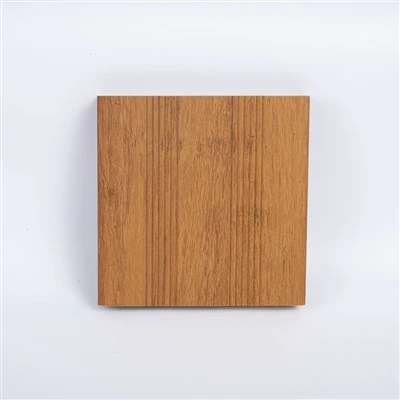
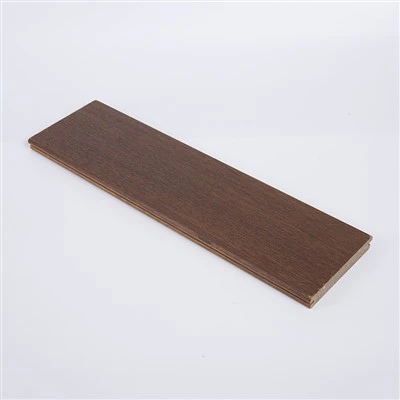
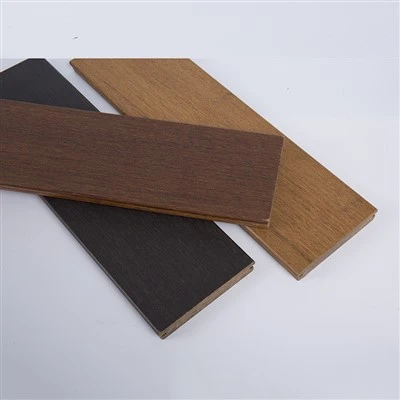
When selecting bamboo flooring, consider the following: First, examine the surface-check for air bubbles in the finish, ensure the appearance is fresh and lustrous, look for excessively dark bamboo nodes, and check for "glue lines" (uniform, straight lines running lengthwise caused by imprecise machining or uneven hot-press pressure). Next, inspect the edges for cracks or traces of putty filler, ensuring a clean, neat finish. Then, examine the underside for any remaining green or yellow bamboo skin; it should be clean and tidy. After these checks, inspect the actual product against the sample to ensure consistency. Finally, consider the installation: if joists are required, the standard spacing is approximately 30 cm; a standard board requires four joists, though many dealers use only three. Because bamboo is elastic, insufficient joist support can lead to creaking sounds.
Key Characteristics
Bamboo flooring exhibits minimal color variation. Since bamboo has a much smaller growth radius than trees and is less affected by sunlight, there is no distinct difference between the "sunny" and "shady" sides of the material; this results in rich bamboo grain patterns and uniform color. High surface hardness is another advantage. Due to its coarse fibrous plant structure, bamboo flooring is more than twice as hard as wood and resists deformation, with a theoretical lifespan of 20 years. In terms of stability, bamboo flooring undergoes less expansion and contraction than solid wood flooring. However, there are durability drawbacks: exposure to sunlight and humidity can cause delamination. Because bamboo has high thermal mass and density, it retains heat well, offering good thermal insulation properties during winter.
Environmental Standards
For laminate flooring, the primary environmental standard concerns formaldehyde emission levels. The industry has undergone three technological revolutions regarding these limits: E1, E0, and FCF. In the early stages, the standard for engineered wood products was E2 (formaldehyde emission ≤ 30mg/100g). This limit was very lenient; even products meeting this standard could contain more than three times the formaldehyde found in E1-grade materials, posing a serious health risk. Consequently, E2-grade products are absolutely unsuitable for home renovation or decoration. This led to the first environmental revolution in the flooring industry, which introduced the E1 environmental standard-limiting formaldehyde emissions to ≤1.5 mg/L. While this level posed no significant threat to human health, residual free formaldehyde remained in the flooring. Consequently, the industry launched a second environmental revolution, introducing the E0 standard, which reduced formaldehyde emissions to 0.5 mg/L.
Consider Quality
High-quality flooring requires excellent materials-specifically, natural materials with optimal density. Contrary to the common belief that higher density is always better for engineered wood, excessively high density can actually increase the water absorption and swelling rate, leading to dimensional instability and warping. Furthermore, producing top-tier flooring relies on advanced production lines, state-of-the-art equipment, and rigorous manufacturing processes. Quality can also be assessed through certifications and accolades such as "National Product Exempt from Quality Inspection," ISO9001 Quality Management System certification, and ISO14001 Environmental Management System certification; obtaining such honors is invariably the result of a company's commitment to meticulous operational excellence.
Consider Service
Service is integral to guaranteeing product quality and reflects the company's corporate image. Issues such as warping, curling, or cracking shortly after installation are often caused by improper installation techniques. Therefore, the professionalism of the service directly impacts the product's performance. "Dust-free installation" is a growing trend; dust pollution during home renovations is a serious concern, as wood chips and airborne dust generated during flooring installation can pose long-term health risks. Residents moving into new homes sometimes suffer from "New Home Syndrome"-experiencing symptoms like morning tightness in the chest, nausea, dizziness, frequent colds, throat discomfort, and breathing difficulties, as well as chronic fatigue. These issues often stem from respiratory irritation caused by prolonged exposure to airborne dust. Opting for dust-free installation is the best way to avoid this type of pollution.
Consider the Brand
A brand represents far more than just corporate recognition or popularity. A mature and successful brand is defined not merely by market dominance or high visibility, but by the strong psychological bond it establishes with consumers. A brand that earns widespread recognition is built through long-term interaction between the company, its products, and the consumer; it emerges in the minds of consumers as a result of many factors, including the passage of time, concrete corporate actions, and the continuous improvement of products and services. A corporate brand represents a promise and an attitude-a guarantee for the consumer. Therefore, when selecting products, it is advisable to choose established brands to ensure superior quality, service, and overall reliability.
Consider the Price
The current building materials industry is plagued by instances of profiteering and practices that harm consumer interests; this unhealthy climate has eroded consumer trust. With pricing in a state of disarray, consumers often feel confused and uncertain about whether they are getting good value for their money, leading to a desire for greater price transparency. The price of bamboo flooring generally hovers around 280 yuan per square meter.