
Warm in Winter, Cool in Summer
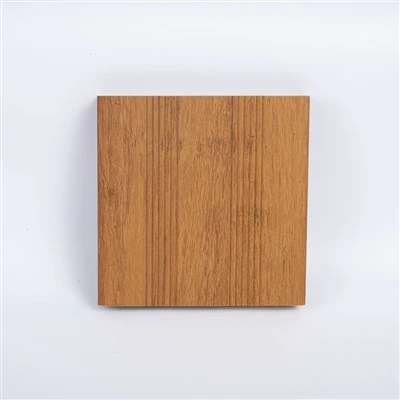
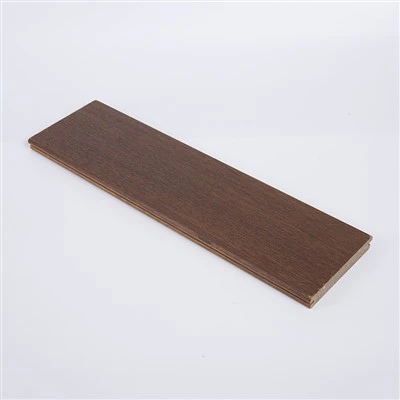
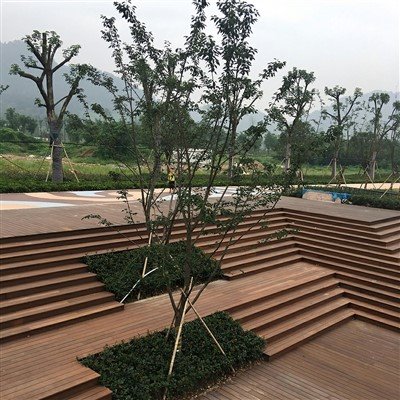
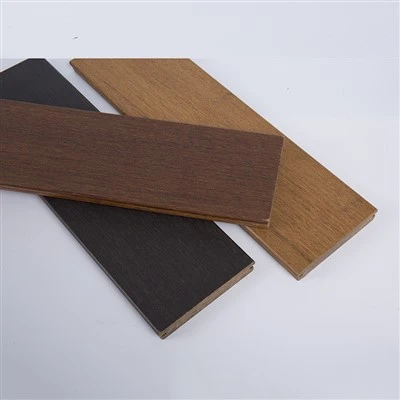
A standout advantage of bamboo flooring is that it stays warm in winter and cool in summer. Due to its low thermal conductivity, bamboo does not feel cold to the touch or radiate heat. It is particularly suitable for flooring and wall decoration in living rooms, bedrooms, gyms, studies, broadcast studios, and hotels. Minimal color variation is another key characteristic. Bamboo flooring generally falls into two color categories: natural and stained. Natural-colored flooring-which exhibits less color variation than wood flooring-features rich, uniform bamboo grain patterns; this category includes "natural" (light) and "carbonized" (dark) finishes. The natural finish uses a clear coat to showcase the bamboo's original, bright, and cheerful hue, while the carbonized finish-achieved through a heat-treatment process-offers a subdued, elegant look that retains visible grain patterns amidst its rich, deep tones. The second category consists of stained finishes, where the coating can be tinted to various colors, though this tends to obscure the natural grain. Common surface treatments include clear coats, high-gloss finishes, matte finishes, and wear-resistant coatings.
Bamboo flooring is primarily manufactured using two structural configurations: horizontal pressing (flat-pressed) and vertical pressing. Both methods involve arranging the bamboo strips "back-to-back" regarding their natural curvature, utilizing the material's inherent flexibility to balance expansion and contraction rates across varying environmental conditions.
Long Lifespan
Bamboo flooring has a theoretical lifespan of approximately 20 years; proper use and maintenance are key to maximizing this longevity. Managing indoor humidity is crucial, as bamboo-despite undergoing drying treatments-remains a natural material that reacts to climatic changes. During dry seasons, especially when heating systems are in use, consumers should employ methods to adjust indoor humidity, such as using a humidifier or placing a bowl of water near the heat source. Conversely, during humid summers, windows should be opened frequently to ensure ventilation and keep the interior dry. Additionally, bamboo flooring should be protected from direct sunlight and rain; any water spills should be wiped up immediately. Users should also take care to avoid impacts from hard objects, scratches from sharp tools, and friction from metal against the floor's finish. For routine maintenance, first sweep the bamboo flooring and then wipe it with a well-wrung cloth; if possible, apply floor wax every two to three months. Bamboo flooring typically consists of a UV lacquer layer, a decorative layer, a core layer, and a moisture-proof layer; it is solid and wear-resistant, featuring soft, beautiful colors, a fresh natural grain, and a pleasant bamboo scent. It stays warm in winter and cool in summer, resists insects, mold, cracking, decay, and wear, and maintains its shape. The surface UV lacquer is rich and substantial-glossy yet non-slip-and the entire board is sealed with waterproof lacquer. Adhesives and UV lacquers meet international environmental standards and are non-toxic to humans, making this a green product for home decoration. Priced between laminate and solid wood flooring, it offers a natural look, simple maintenance, and relatively low susceptibility to warping, providing excellent value for money. However, it is not suitable for humid regions, as it is prone to mold in damp environments.
Beautiful Appearance
Bamboo boasts a beautiful natural color and offers elasticity, moisture resistance, and mold resistance. It is highly durable, stays warm in winter and cool in summer, and-when the curved surface of the bamboo is used as the visible face-exudes a unique aesthetic charm.